Table of Contents
Introduction
Search feels louder in 2026. More ads. More AI answers. More competition.
Off-page SEO helps you stand out because it builds trust outside your website. Trust drives clicks. Trust drives rankings.
This post breaks down off-page SEO and gives a clear plan you can use right now. No fluff. Just the work that holds up over time.
What is Off-Page SEO?
Off-page SEO commonly includes:
- Backlinks from relevant websites
- Brand mentions, with or without links
- Customer reviews and ratings
- Local citations for a local business
- Digital PR and strategic partnerships
- Community activity that attracts real attention
Think of off page SEO as proof of credibility. Other websites mention your brand. Customers share their experiences. Industry sources reference your content.
Search engines treat this proof as a ranking factor because it signals trust, relevance, and real-world value.
If you’re new to SEO or want a broader foundation, start with our complete guide: What Is SEO and How Does It Work?
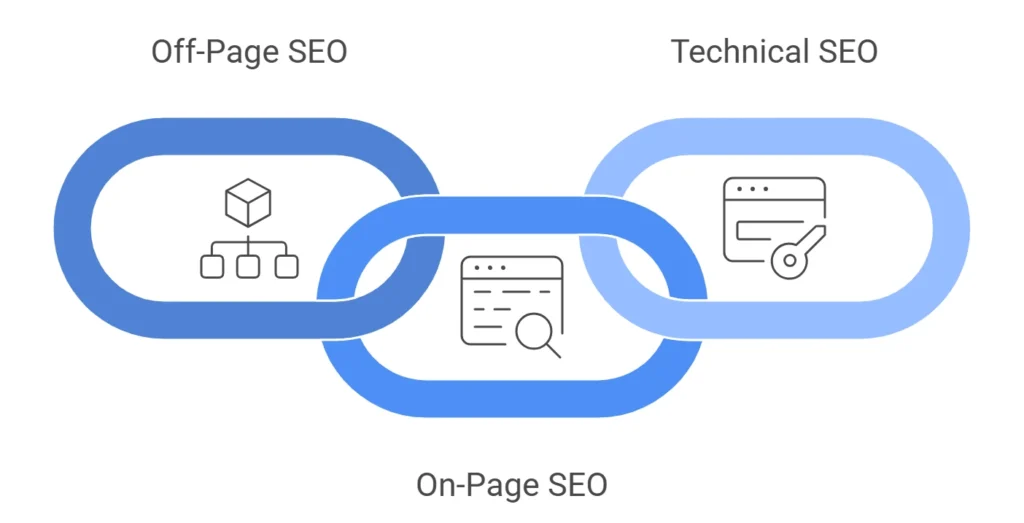
Off-Page SEO vs On-Page SEO vs Technical SEO
Off-page SEO delivers the best results when strong on-page and technical SEO support it. Each area plays a different role in search performance.
Quick comparison
| SEO area | What it focuses on | Examples |
| On-page SEO | Content and page signals on your site | Titles, headings, internal links, keyword use, search intent match |
| Technical SEO | How search engines crawl and render your site | Speed, indexing, mobile usability, sitemap, structured data |
| Off-page SEO | Trust signals from outside your site | Backlinks, mentions, reviews, PR, local citations |
Off-page SEO cannot support a weak page for long. Strong pages guide the visitor, build trust, and convert the click and bring organic traffic.
Why Off-Page SEO Matters More in 2026
AI-powered search tools summarize answers fast. Google results pages also show more “instant answers.”
Trust matters more in that environment. Search engines and AI systems want trusted sources. People want trusted sources too.
Off-page SEO helps with:
- Higher rankings for competitive queries
- More clicks from crowded results pages
- More brand searches (people search your name on purpose)
- More trust for high-stakes topics
Short version. Off-page SEO helps your brand look real. That credibility supports better rankings in 2026.
Best Practices to Improve Rankings With Off-Page SEO in 2026
1) Set the right goal first
Random link building wastes time. Clear goals keep you focused.
Pick one main goal:
- More leads
- More sales
- More demo requests
- More store visits for a local business
Then pick two metrics that match the goal:
- Referring domains to key pages
- Leads or sales from referral traffic
- Branded searches (people searching your brand)
- Review count and rating average
Off-page SEO strategy performs better when you track one simple scoreboard and review it often.
2) Create one “linkable asset” per topic
Many teams publish blogs that no one references. Off-page SEO needs pages that other websites want to cite and share.
Create content that helps in a clear way:
- A practical checklist
- A ready-to-use template
- A short study with original data
- A comparison table that saves time
Quick example:
A local accountant publishes a “2026 Small Business Tax Deadline Calendar” with a simple table. Local blogs and chambers of commerce link to it. Off-page SEO improves without risky tactics.
3) Earn relevant backlinks, not random backlinks
Off-page SEO rewards relevance. One strong link can beat ten weak links.
Target link sources that make sense:
- Industry blogs with real readers
- Local news websites
- Partner sites such as vendors, associations, or clients
- Resource pages that list helpful tools or services
Good anchor text sounds natural and matches the topic of the page.
Best Practice:
- On-page SEO best practices
- SEO checklist for small businesses
- local SEO guide
Bad Practice:
- click here
- best SEO services cheap
- buy backlinks now
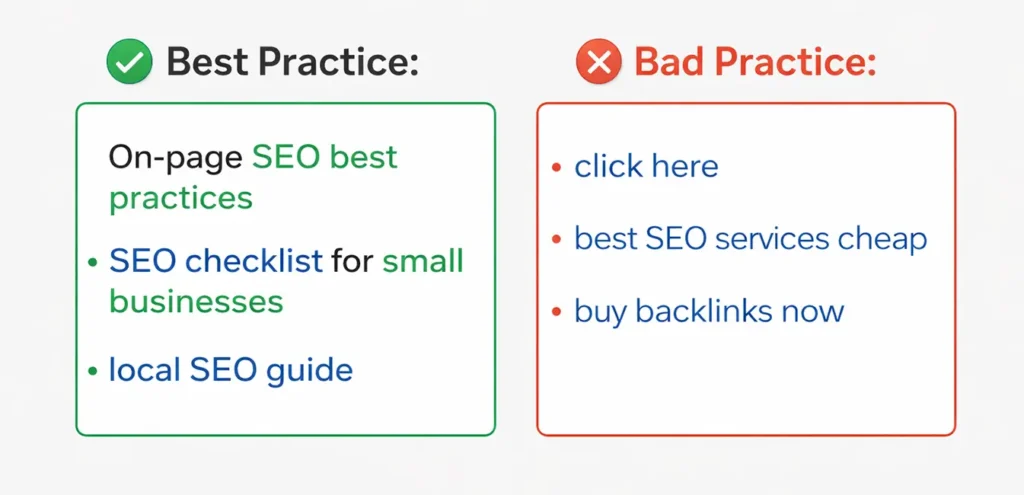
Pro Tips: Partial-match anchor text supports long-term SEO because it feels natural to readers and search engines. Exact-match anchor text fits best on highly relevant pages from trusted sources.
Ask one simple question before outreach:
“Would a customer trust this site?”
Strong off-page SEO follows that test and avoids links that add no real value.
4) Turn brand mentions into links
Brands get mentioned without links all the time. Those mentions offer an easy win for off-page SEO.
Use this simple process:
- Find an unlinked brand mention
- Thank the writer for the reference
- Ask for a link to your most relevant page
Keep the message short. Stay polite. Be clear.
5) Build local authority for a local business
Local SEO looks different from national SEO. Reviews and citations matter a lot.
Focus on these basics:
- Accurate details on your Google Business Profile
- Consistent business name, address, and phone number across listings
- Steady reviews from real customers
- Calm, helpful replies to reviews
Local trust helps local rankings because local user intent usually means “I need this now.”

6) Use social media for reach, not direct ranking
Social media does not always pass strong link value. Social media still supports off-page SEO in real ways.
Social media helps you:
- Put your content in front of writers and publishers
- Increase branded searches
- Earn shares that lead to backlinks
Off-page SEO improves when more people see your best pages.
7) Support AI search by publishing cite-friendly sections
AI-generated answers often pull short and clear sections from trusted pages.
Add elements that make citation easy:
- Short definitions
- Step-by-step lists
- Mini FAQ sections
- Simple tables
This small on-page assist supports off-page SEO by making your content easier to reference and cite
Note: schema markup and structured data live on-page, yet they still support the off-page SEO goal. They help search engines understand your page, which can increase your chance to win featured snippets.

Safe Off-Page SEO Tactics
These tactics work well for most brands in 2026.
Digital PR that earns trust
Digital PR works best when you share something useful.
Strong PR angles include:
- Local data
- Short expert quotes
- Small studies from your own customer data
- Clear commentary on current SEO trends
Weak PR angles usually fall flat:
- Hype with no proof
- Low-value announcements
- Claims you can’t back up
Off-page SEO grows faster when your message provides real value.
Resource page outreach
Many websites maintain “tools we recommend” or resource pages for their audience.
Follow these steps:
- Find relevant resource pages in your niche
- Check the quality and credibility of each site
- Pitch one page that genuinely fits their list
This approach builds off-page SEO without spam or risk.

Broken link outreach
Broken link building improves off-page SEO by fixing links that hurt user experience on other websites. Your replacement link solves the problem and adds value.
Follow these steps:
- Find a broken link on a relevant page
- Offer your page as a suitable replacement
- Keep the email short and helpful
Building credibility beyond your website creates value for both sides.
Risky Tactics to Avoid
Some tactics can hurt off-page SEO and trust.
Avoid these practices:
- Buying links from low-quality websites
- Running large-scale link exchanges
Posting spam comments for backlinks - Using private blog networks
- Publishing fake reviews
These tactics can damage your brand and rankings. Off-page SEO should build trust, not risk it.
Pros and cons table: common tactics
| Tactic | Pros | Cons |
| Digital PR | Earns strong links and trust | Takes planning and consistency |
| Partner links | High relevance and easy wins | Limited scale |
| Guest blog (selective) | Builds authority in a niche | Quality control matters |
| Directories | Can help local business citations | Spam directories can hurt trust |
| Paid links | Fast in the short term | High risk and poor long-term value |
Off page SEO rewards the tactics that hold up under review.
Tracking Results
Off-page SEO needs simple tracking. Complex dashboards often slow teams down.
Track these four items monthly
- New referring domains
- Top linked pages (which content earns links)
- Brand mentions and review growth
- Leads and sales from referral traffic
Simple reporting table
| Metric | This month | Last month | Notes |
| Referring domains | |||
| Brand mentions | |||
| Reviews gained | |||
| Referral leads |
Off-site SEO improves faster when you repeat what works.
Actionable Checklist
Use this checklist as your off-page SEO plan for 2026. Keep it practical. Keep it consistent.
Weekly
- Check new brand mentions
- Reply to new reviews
- Share one key page on social media
- building relationships (partner, community, journalist)
Monthly
- Pitch 10–20 relevant sites with one clear offer
- Publish one linkable asset or upgrade an older one
- Run a quick backlink quality review
- Review user intent match on the page you promote most
Quarterly
- Publish one “big” asset: template, study, or full checklist
- Refresh local citations for each location
- Audit reputation and customer feedback themes
- Update your best off-page SEO outreach templates
Small steps. Long-term gains.
Beginner Mistakes
New teams often hurt off-page SEO without meaning to.
Common mistakes:
- Chasing link volume instead of relevance
- Pointing links to weak pages with poor user experience
- Sending copy-paste outreach emails
- Ignoring reviews for a local business
- Relying on AI-generated content without human edits
- Skipping tracking, then guessing what worked
Off-page SEO rewards focus and consistency.
FAQ (2026 Updated)
What is off-page SEO in simple terms?
Off-page SEO means the trust signals that happen off your website, like high quality backlinks, mentions, and reviews.
Do backlinks still matter in 2026?
Yes. Off page SEO still uses backlinks as a key trust signal. Quality and relevance matter more than volume.
Does social media help off page SEO?
Social media helps distribution and brand awareness. It can lead to more mentions and earn backlinks, which strengthens off-page SEO.
What SEO works best for a local business?
Reviews, citations, and local partnerships often drive the biggest results for a local business.
How long does off-page SEO take to work?
Off-page SEO usually takes weeks to months. Strong pages and steady outreach speed up results.
Can AI-powered search change off-page SEO?
Yes. AI-powered search often pulls from trusted sources. Off-page SEO helps your brand earn that trust through mentions, links, and reviews.
Should I remove bad backlinks?
Start with a link quality review. Focus on earning better links first. Use removal or disavow options only after careful review.
Conclusion
Off-page SEO builds authority where your customers already spend time. Other sites. Review platforms. Communities. News.
In 2026, trust drives rankings more than tricks. Off-page SEO gives you that trust through proof from the outside world.
Use the checklist, stick to safe tactics, and track results. Consistency wins.
Key Takeaways
- Off-page SEO builds trust signals outside your site
- Backlinks, mentions, and reviews act as a major ranking factor in 2026
- Relevance beats volume for off-page SEO
- Local business SEO relies heavily on reviews and citations
- Social media supports reach and brand signals
- Strong pages with clear sections earn more citations and featured snippets
- A simple monthly report keeps off-page SEO on track
- Long-term consistency beats shortcuts