Sam had just launched a website for her small bookkeeping business. Every morning she searched “bookkeeping services” and found her site buried under national brands. Then she tried a different approach. She wrote a page for “bookkeeping for Etsy sellers in Ohio.” Within a few months, it ranked on page one and brought in her first organic clients.
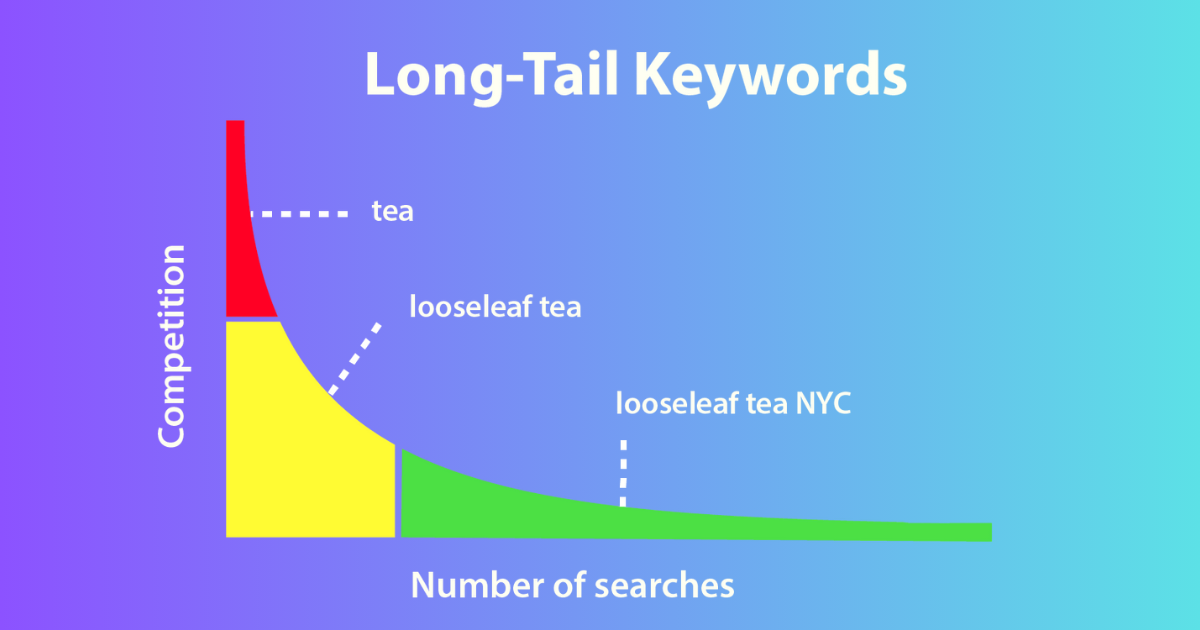
That’s the power of long-tail keywords. They’re longer, more specific search phrases that big sites ignore. This guide shows you which types of long-tail keywords are easiest to rank for, how to find them for free, and how to turn them into pages that win.
What Are Long-Tail Keywords?
Long-tail keywords are specific search phrases, usually three or more words, that get fewer searches than broad terms but show much clearer intent. The phrase “running shoes” is a broad keyword. The phrase “best running shoes for flat feet women” is a long-tail keyword. Fewer people search it, but they know exactly what they want.
Why Long-Tail Keywords Matter
Most searches are specific. An Ahrefs study of its keyword database found that about 92% of all keywords get 10 or fewer searches per month. That long tail is huge, and it’s where smaller sites can compete.
- Less competition: Big brands chase high-volume terms. Specific phrases are often left wide open.
- Clearer intent: You can see exactly what the searcher wants, so it’s easier to give it to them.
- Better conversions: Specific searchers are usually further along in their decision, so they’re more likely to buy, book, or sign up.
- Faster wins: Newer sites can rank for long-tail phrases months before they can compete for broad terms.
- AI search fit: People ask ChatGPT and Google’s AI Mode long, conversational questions, which look a lot like long-tail keywords.
New to keyword research? Start with our SEO keyword research guide.
What Makes a Long-Tail Keyword Easy to Rank For?
A long-tail keyword is easy to rank for when it’s specific, has clear intent, faces weak competition on page one, and fits your site’s expertise. Look for results pages filled with forum threads, thin articles, or pages that only half answer the question. Those are signs you can win with one focused, helpful page.
- Specific: The narrower the phrase, the fewer sites target it.
- Clear intent: You can tell at a glance what the searcher wants.
- Weak competition: Page one shows Reddit or Quora threads, outdated posts, or general pages that don’t match the query well.
- Low keyword difficulty: Tools like Semrush or Ahrefs rate it as easy, often under 30.
- Relevant to you: It fits your products, services, and existing content.
6 Types of Long-Tail Keywords That Are Easiest to Rank For
1. Location-Specific Keywords
These include a city, region, or neighborhood.
- “SEO services in Brisbane for small businesses”
- “Emergency plumber in Lincoln Park Chicago”
- “Austin wedding photographer under $3,000”
Why they work: National brands rarely build pages for every town or neighborhood. Local businesses can, and these searchers are ready to act. Pair them with a strong Google Business Profile and our local SEO guide.
2. Niche or Industry Modifiers
These add an industry, audience, or platform to a broader topic.
- “SEO tips for real estate agents”
- “SEO audit checklist for Shopify stores”
- “Email marketing for dental practices”
Why they work: Most content targets everyone. A page built for one specific audience feels more relevant and faces far less competition.
3. Question Keywords
These are full questions people type or speak.
- “How do I improve SEO for a new website?”
- “What is the best SEO plugin for WordPress?”
- “Why is my website not showing on Google?”
Why they work: A clear, direct answer can win a featured snippet or a spot in People Also Ask, and it’s exactly what AI tools quote. Our guide to quotable answer blocks shows the format.
4. Transactional and Comparison Keywords
These show the searcher is ready to choose, buy, or sign up.
- “Best SEO tools for small business”
- “Affordable SEO reporting software for agencies”
- “Semrush vs Ahrefs for beginners”
Why they work: These searchers are close to a decision. Honest, detailed comparisons with real testing stand out against thin affiliate lists.
5. Problem and Solution Keywords
These describe a specific problem and look for a fix.
- “Fix slow WordPress site after plugin update”
- “How to recover from a Google core update drop”
- “Duplicate content issues on Shopify collections”
Why they work: People with a problem want help now and read carefully. Big sites rarely cover narrow problems, so the field is often open.
6. Product or Feature Keywords
These focus on a specific product, template, or feature.
- “SEO reporting template for agencies”
- “Rank tracker with local grid view”
- “WordPress SEO plugin with schema support”
Why they work: These searchers know what they need. Specific feature pages answer them directly.
Real Examples of Easy Long-Tail Keywords
| Type | Example keyword | Best page format |
|---|---|---|
| Location-specific | “SEO consultant in Newcastle NSW” | Local service page |
| Niche modifier | “SEO audit checklist for Shopify stores” | Checklist or guide |
| Question | “How to do SEO for an ecommerce site” | Step-by-step guide |
| Transactional | “Affordable local SEO services for startups” | Service or pricing page |
| Problem and solution | “Fix slow website after theme change” | Troubleshooting guide |
| Product or feature | “SEO reporting template for agencies” | Template or download page |
How to Find Easy Long-Tail Keywords for Free
Google Search Console
Your own data is the best place to start. In the Performance report, look for long queries with impressions but few clicks, especially in positions 8 to 30. These are searches Google already associates with your site. Our Search Console guide shows where to look.
Google Autocomplete, People Also Ask, and Related Searches
Start typing your topic into Google and note the suggestions. Then check People Also Ask and Related Searches at the bottom of the page. Every one is a real search.
Reddit, Quora, and Industry Forums
Search your topic on Reddit and in niche communities. The exact questions people ask, in their own words, make excellent long-tail keywords.
Competitor Gaps
Look at what competitors rank for in tools like Semrush or Ahrefs. Find the specific topics they cover poorly or not at all.
AI Assistants for Brainstorming
ChatGPT, Claude, or DeepSeek can generate dozens of long-tail ideas in seconds. They can’t show real search volume, though, so check every idea in a keyword tool. Our list of DeepSeek SEO prompts includes one for this.
How to Write Content That Ranks for Long-Tail Keywords
- Check the results page first. Search the keyword and note what ranks. Match the format, then make yours more complete and more useful.
- Match search intent. A question needs an answer. A comparison needs a fair comparison. A local search needs a local page.
- Answer fast. Put the direct answer in the first paragraph, then add detail.
- Use the keyword naturally. Include it in the title, H1, URL, first 100 words, and one subheading. Use related phrases throughout.
- Structure for skimming. Use clear headings, short paragraphs, lists, and tables.
- Add real expertise. Include examples, screenshots, and lessons from your own work.
- Link it up. Link to a related pillar page and to two or three related posts. Add descriptive alt text to images.
- Keep it fresh. Update stats, tools, and steps as things change.
Our guide on writing SEO-friendly blog posts walks through each step in detail.
Tips for Success With Long-Tail Keywords
- One main keyword per page. Group close variations together, but don’t make two pages chase the same search.
- Skip keyword stuffing. Write naturally and use synonyms.
- Build clusters. Ten long-tail posts linked to one pillar page build authority faster than ten unrelated posts.
- Track results. Watch impressions and positions in Search Console, or track keyword rankings for free.
- Write for people first. Solve the problem fully, and rankings follow.
Long-Tail Keyword FAQs
How long is a long-tail keyword?
Most long-tail keywords have three or more words, but length isn’t the real test. A long-tail keyword is specific and gets relatively few searches. Some two-word terms in niche markets act like long-tail keywords, while some longer phrases are still very competitive.
Are long-tail keywords worth it if they get so few searches?
Yes. One long-tail keyword brings modest traffic, but dozens of them add up fast, and those visitors tend to convert well because they know what they want. A single page also often ranks for many related long-tail variations at once.
How quickly can I rank for long-tail keywords?
Low-competition long-tail keywords can start ranking within weeks to a few months, especially on sites with some existing authority. Brand-new sites may take longer. Results come faster when the page fully answers the query and links to related content on your site.
Final Thoughts
Long-tail keywords give smaller sites a real path to page one. Location-specific, niche, question, transactional, problem-and-solution, and product keywords are the easiest to win. Find them in your own Search Console data and Google’s suggestions, check the competition, and build one focused, helpful page for each.
Want help building a long-tail keyword plan? Contact the Rankiwis team, or read our ultimate guide to SEO for the bigger picture.