SEO for small businesses looks different in 2026. Google now shows AI-written answers above many results, people ask ChatGPT for recommendations, and buyers check TikTok and Google Maps before they ever visit your website. Small budgets can still win, though. You just need to focus on the right things.
This guide covers the SEO trends that matter for small businesses right now, how AI search changes your visibility, the mistakes that hold most local and small brands back, and a simple checklist you can work through this month.
Why SEO Still Matters for Small Businesses in 2026
SEO still matters for small businesses because search remains the moment people decide who to call, visit, or buy from. A page that ranks well, or gets cited in an AI answer, keeps bringing customers month after month without a cost per click. Paid ads stop when your budget does. SEO keeps working.
SEO also supports every other channel. Someone sees your Instagram post, searches your name, reads your reviews on Google, and lands on your site. If your pages load slowly or say little, they leave. Clear pages, strong reviews, and helpful content turn that search into a sale.
How Search Behavior Is Changing
People search in full sentences now, often by voice or in a chatbot. Short, vague searches still exist, but specific questions keep growing:
- “Best family dentist near me open on Saturday”
- “How much does a bathroom remodel cost in Austin”
- “Is a heat pump worth it in a cold climate”
Search engines work hard to understand the intent behind each phrase. Pages that answer one specific question well often beat bigger sites with vague, general pages. That’s good news for small businesses that know their customers.
AI Search and What It Means for Small Business Sites
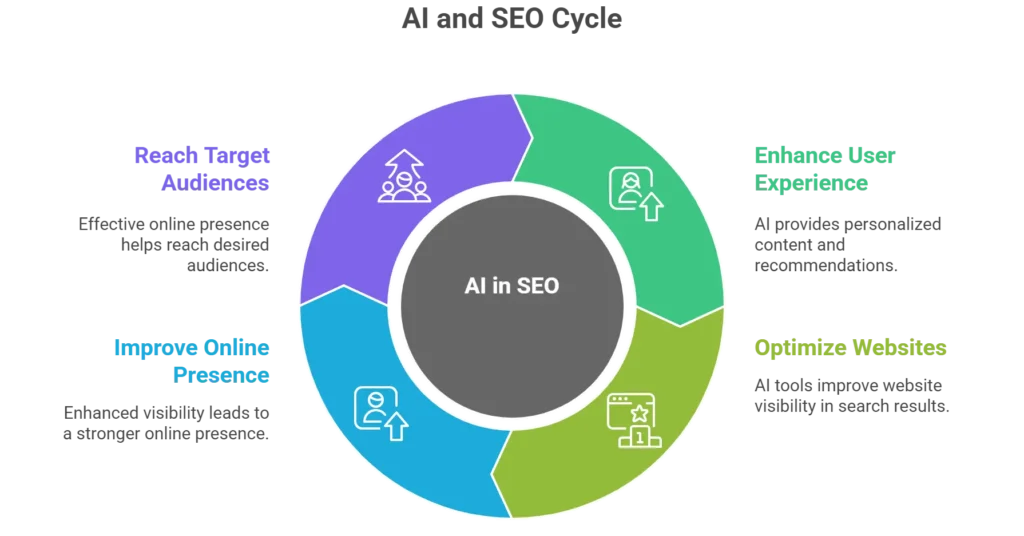
AI search tools like Google AI Overviews, Google AI Mode, ChatGPT, and Perplexity answer questions directly and cite a few sources. For small businesses, that means fewer clicks on simple questions but a real chance to be the recommended answer. Clear, specific, trustworthy pages get cited. Thin service pages get skipped.
AI Overviews already appear often. Semrush research found them on about 13% of queries in March 2025, and Google has since rolled out AI Mode, a full chat-style search experience. Some searches now end without a click, a trend we cover in our post on zero-click searches. A citation as the source still builds trust at the moment someone is choosing.
How to Shape Your Content for AI Answers
- Lead with the answer. Put a short, direct answer of 40 to 60 words at the top of each key section. Our guide to quotable answer blocks shows how.
- Turn real questions into headings. Use the exact questions customers ask on calls and in emails.
- Use lists and tables for steps, prices, and comparisons.
- Add structured data. LocalBusiness, Service, Product, FAQPage, and Article schema help search engines and AI tools read your pages.
- Be specific. Name your service areas, prices or price ranges, timelines, and real examples.
Learn more in our guides to generative engine optimization and optimizing content for AI search.
Topical Authority, E-E-A-T, and Local Trust
Google and AI tools judge more than keywords. They look for E-E-A-T: experience, expertise, authoritativeness, and trust. Many small business sites list services in a thin, generic way, which shows none of these.
Build Topic Clusters Around Your Best Services
- Pick two or three services that bring in the most profit.
- Create one in-depth main page (a pillar) for each.
- Add supporting posts that answer specific questions about that service.
- Link the pillar and supporting posts together so readers and crawlers see the full picture.
Show Real-World Proof
- Use real photos of your team, work, and premises, not stock images.
- Add short bios that show who does the work and their experience.
- Publish case studies with before and after results, timelines, and numbers.
- Collect reviews steadily and show them on key pages.
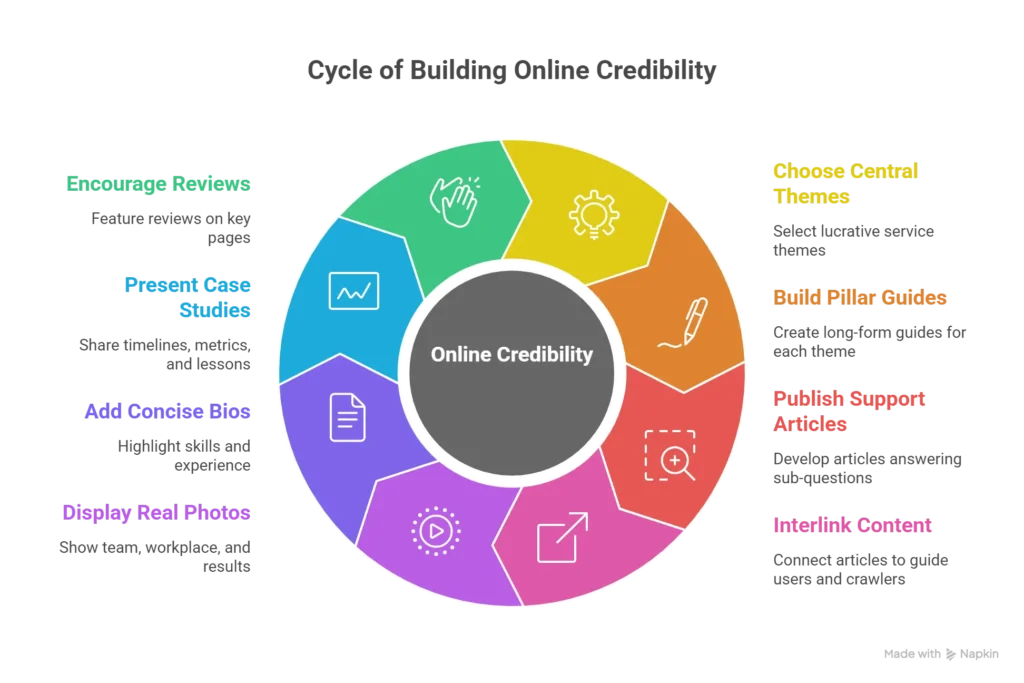
This kind of proof builds trust with people and gives search engines clear signs that your business is real and capable.
Local SEO Is Still the Biggest Win
For most small businesses, the Google map pack is where customers find you. Google says local rankings depend on relevance, distance, and prominence, and that review count and rating play a part.
- Complete every field in your Google Business Profile and post updates regularly.
- Keep your name, address, and phone number identical everywhere.
- Ask every happy customer for a review and reply to all of them. Our guide on getting more Google reviews has scripts.
- Create a page for each main service and, where it makes sense, each area you serve, with unique local details.
Our local SEO guide and post on the Google Local Pack go deeper.
Beyond Google: Voice, Visual, and Social Search
Customers rarely follow a straight line. Someone might spot you on TikTok, check your Google reviews, ask ChatGPT for alternatives, and then visit your website.
Voice Search
Voice searches are long and often local, like “plumber near me open now.” Pages that mention your city, neighborhoods, and landmarks, plus clear hours and contact details, match these searches well.
Visual Search
Google Lens lets people search with a photo. For food, fashion, decor, and home services, use original photos, descriptive file names, and accurate alt text. Our image SEO guide explains the details.
Social Search
Many people, especially younger buyers, search inside TikTok, YouTube, and Instagram. Turn your best questions into short videos, point viewers to your full guides, and turn your top-performing videos into blog posts. It builds depth across every channel. Our content marketing strategy guide shows how to plan it.

Content Types That Work for Small Business SEO
Simple blog posts still work, but the best-performing content now acts as a useful tool:
- Step-by-step guides that take readers from problem to solution.
- Checklists for common tasks, audits, or seasonal jobs.
- Comparison pages that weigh options, packages, or methods honestly.
- Price guides that explain what affects cost in your area.
- Case studies with real outcomes and timelines.
- Short videos embedded in your main guides.
AI tools help with outlines and first drafts, and that’s fine. But AI drafts need expert editing, real examples, and fact checks before they go live. Google’s guidance targets content made mainly to rank, not content made with AI. Our guide to writing SEO-friendly blog posts covers the process.
Technical SEO Foundations
Great content needs a solid base. Focus on these basics:
- Speed: Check mobile speed with PageSpeed Insights and fix your Core Web Vitals.
- Mobile usability: Test key pages on a real phone.
- Clear navigation: Use simple labels and keep key pages within a few clicks of the homepage.
- HTTPS: Secure every page.
- Clean indexing: Check the Page indexing report in Google Search Console for errors.
- Structured data: Validate it with Google’s Rich Results Test.
Our technical SEO beginner’s guide walks you through each one.

Small Business SEO Checklist for 2026
Strategy and Research
- Pick one to three high-value services or themes.
- List the questions and long-tail keywords customers use for each. See our keyword research guide.
- Plan one pillar page and three to five supporting posts per theme.
On-Page SEO
- Put the main keyword in the title tag, H1, first paragraph, and one subheading.
- Keep paragraphs short and focused.
- Add at least one list, table, or set of steps to each key page.
- Include real examples, numbers, and photos from your own work.
AI-Ready Layout
- Turn sales and support questions into headings.
- Answer each one in 40 to 60 words, then add detail.
- Add FAQPage, LocalBusiness, and Service schema where they fit.
Technical Health
- Compress large images and remove unused plugins or scripts.
- Check pages on several phones and browsers.
- Fix broken links and redirect chains.
Trust and Local Proof
- Add author names, photos, and short bios to key guides.
- Show your address, phone, service area, and contact options clearly.
- Collect and display reviews from real customers.
- Keep your details consistent across your site, social profiles, and directories.
Work through one section a week, and SEO turns from a vague goal into a steady routine.
Common SEO Mistakes Small Businesses Still Make
- Broad keywords only: Targets like “plumber” instead of “emergency plumber in Dayton.”
- Content as a one-off project: A burst of posts, then nothing for a year.
- Unedited AI content: AI drafts that go live with no expert review or real examples.
- Poor mobile experience: Slow, cluttered pages on phones.
- Stale pages: Outdated prices, services, and stats on key pages. Our guide on optimizing posts after publishing shows how to refresh them.
- No structured data: Schema missing from high-value pages.
- Neglected reviews: Not asking for reviews, or ignoring the ones you get.
Small Business SEO FAQs
Does AI search remove the need for SEO?
No. AI search changes how people find answers, but AI tools still pull from web pages they can find and trust. SEO gives them clear, accurate, well-structured content to cite. Small businesses that invest in SEO now are more likely to appear in both classic results and AI answers.
How can a small business compete on a small budget?
Focus beats volume. One excellent page for your most profitable service often outperforms ten thin posts. Pair it with a complete Google Business Profile, steady reviews, smart internal links, and a fast site. Then promote that page on the social platform your customers use most.
Which SEO metrics should small businesses track?
Track leads or sales from organic search, organic clicks to your key service pages, and rankings for a short list of high-intent keywords. Watch calls and direction requests from your Google Business Profile too. Our post on SEO metrics that matter explains each one.
Does link building still matter for small businesses?
Yes. Links from local news sites, partners, suppliers, chambers of commerce, and industry associations still help you rank. Focus on a few relevant, trusted links rather than lots of low-quality ones. Local event sponsorships and useful data are easy ways to earn them.
How long does SEO take for a small business?
Most small businesses see early SEO results within three to six months, and local map pack improvements can come faster once your Google Business Profile and reviews are in shape. Competitive industries and new websites take longer.
Final Thoughts
Search keeps changing, but the winning formula for small businesses stays simple: be clear, be specific, and prove you’re trustworthy. Answer real customer questions, build strong local signals, keep your site fast, and add structured data. Each guide, review, and case study adds one more reason for Google, AI tools, and customers to choose you.
Want a plan for your business? Contact the Rankiwis team for a no-pressure SEO review.