A content marketing strategy is your plan for creating and sharing useful content that attracts the right audience and turns them into customers. Without one, content becomes a pile of random blog posts. With one, every piece has a job, a target reader, and a way to measure success.
This playbook walks you through building a content marketing strategy from scratch. You’ll set goals, understand your audience, build pillar content and topic clusters, plan a content calendar, and track the metrics that prove it’s working, with an eye on how AI search is changing the game.
Why Content Marketing Works
Content marketing works because it earns attention instead of buying it. By answering questions and solving problems before you sell, you build trust. When readers are ready to buy, they choose the brand that already helped them. Good content also keeps working for years through search, email, and social sharing.
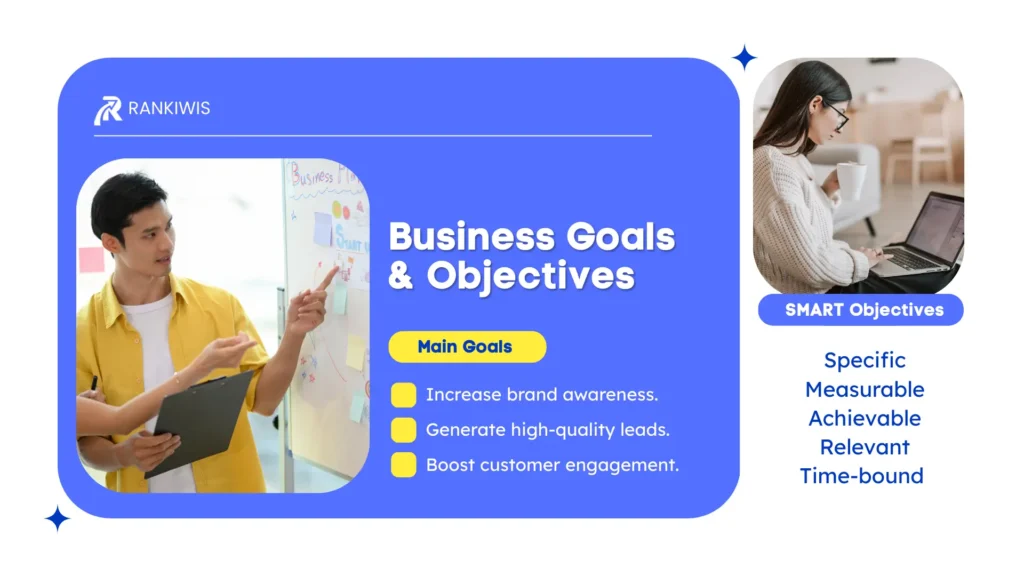
Here’s what a solid strategy delivers:
- Brand awareness: Useful content gets shared and puts your name in front of new people.
- Organic traffic: Search engines reward helpful, relevant content with higher rankings. Our guide to how SEO works explains why.
- AI visibility: Clear, well-sourced content gets cited in Google AI Overviews and tools like ChatGPT.
- Leads: Guides, checklists, and templates turn readers into email subscribers.
- Loyalty: Steady value keeps existing customers engaged and buying again.
Pillar Content: The Foundation of Your Strategy
Pillar content is a long, in-depth piece that covers a broad topic from every angle and links to shorter, more specific articles. Those supporting articles form a topic cluster around the pillar. Together, they show readers and search engines that your site is a go-to resource on that subject.
Take a gardening brand. Its pillar might be “The Complete Guide to Home Gardening.” From there, it can build a cluster:
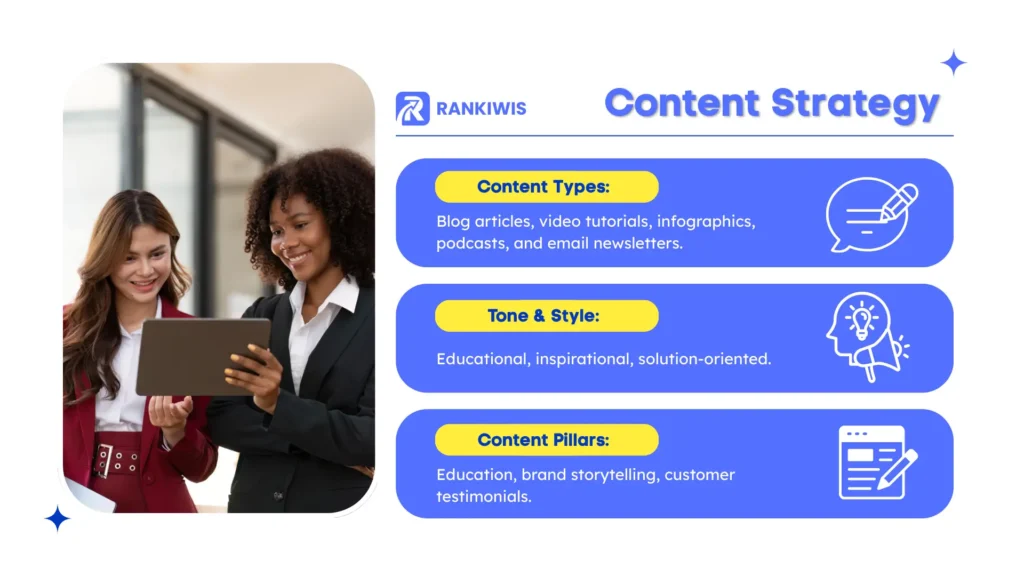
- Blog posts like “How to Choose the Right Soil” and “5 Common Gardening Mistakes”
- An infographic on when to plant each vegetable
- A short video on pruning roses
- A week of social posts with daily plant care tips
- A seasonal email newsletter
This hub-and-spoke model is efficient. One deep piece of research feeds dozens of smaller assets. It’s great for SEO too. The pillar targets a broad keyword like “home gardening,” and each cluster post targets a specific long-tail keyword like “how to prune roses.” Internal links between them tie the cluster together.
How to Build a Content Marketing Strategy in 7 Steps
To build a content marketing strategy, set measurable goals, define your audience, audit what you already have, research topics and keywords, choose your formats and channels, plan a content calendar, and track results. Write it down. A documented strategy keeps your team aligned and makes it far easier to see what works.
Step 1: Set Goals and KPIs
Start with what the business needs. Make each goal specific and time-bound. “Grow our blog” is a wish. “Generate 50 email sign-ups a month from blog content by June” is a goal.
- Awareness: Track organic traffic, branded searches, and social reach.
- Lead generation: Track sign-ups, downloads, and form submissions from content.
- Sales: Track customers whose journey included your content.
- Engagement: Track engaged sessions, email open and click rates, and comments.
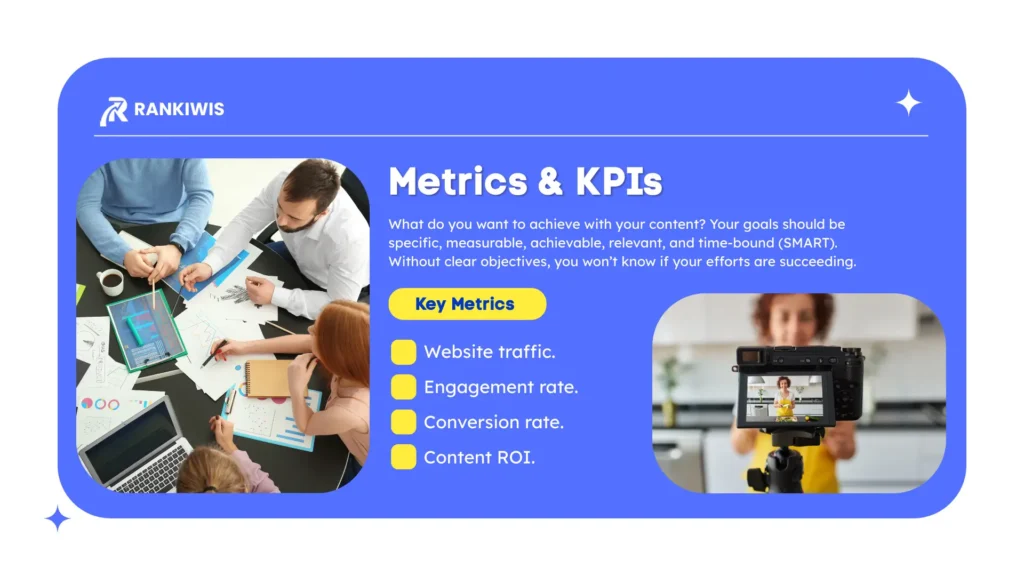
Pick one or two KPIs per goal. Too many numbers make it hard to see what matters. Our post on SEO metrics that matter helps you choose.
Step 2: Understand Your Audience
You can’t create content that resonates if you don’t know who it’s for. Build a simple buyer persona, a profile of your ideal customer based on real data and conversations.

- Who they are: Role, industry, location, and life stage.
- Goals: What they want to achieve.
- Challenges: The problems that keep them stuck.
- Objections: What makes them hesitate before buying.
- Where they learn: The blogs, podcasts, communities, and social platforms they trust.
The best source is your customers. Read sales call notes, support tickets, and reviews, and use the exact words people use.
Step 3: Audit Your Existing Content
Before you create anything new, look at what you already have. A content audit shows which pieces perform, which need updates, and where the gaps are.
- Is it still accurate and current?
- Does it bring traffic, leads, or sales?
- Does it match your current goals and messaging?
- Which important topics haven’t you covered?
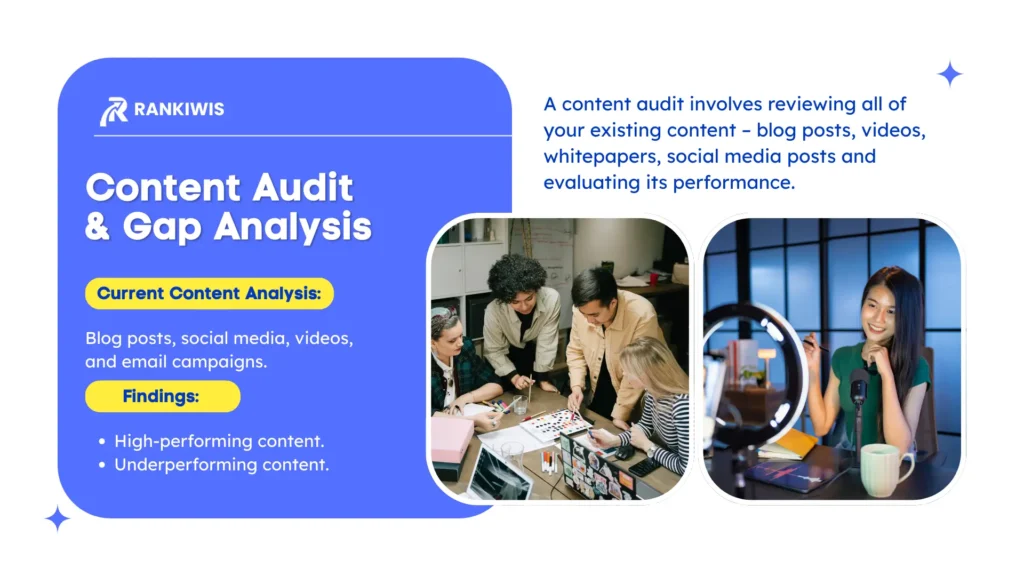
Then decide what to keep, update, merge, or remove. An update to a strong older post often beats a brand-new one. Our guide on how to conduct a content audit walks through the full process.
Step 4: Research Topics and Keywords
Focus on topics where your expertise meets your audience’s needs. These sources help:
- Keyword research tools show what people search and how often.
- Google Search Console shows searches you already appear for.
- AnswerThePublic and “People also ask” reveal real questions.
- Competitor analysis shows which topics others cover well, and which they miss.
- Sales and support teams know the questions customers ask every day.
Group your ideas into clusters under each pillar theme. That structure builds authority faster than scattered posts.
Step 5: Choose Your Formats and Channels
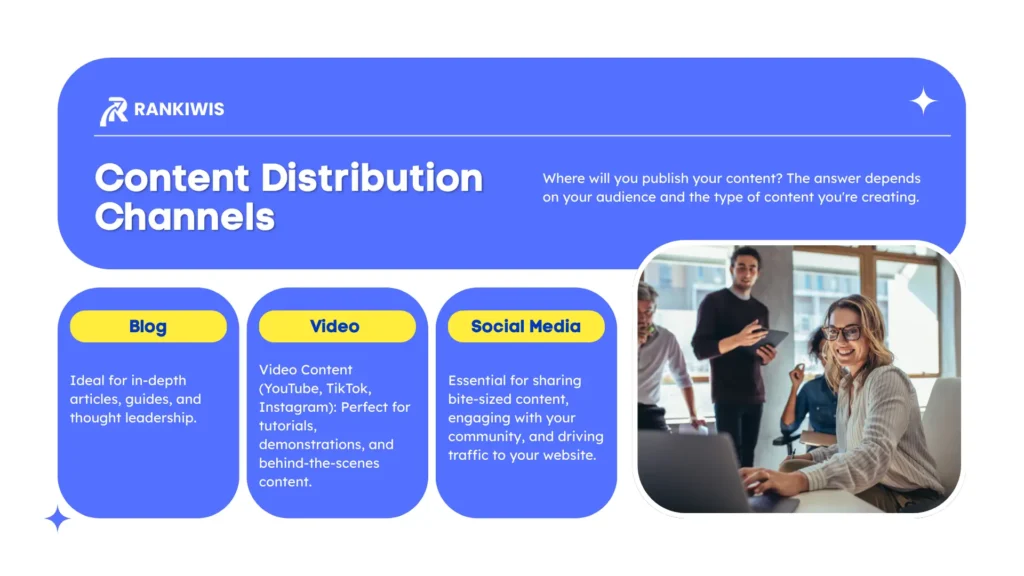
Match each format to your audience and goal:
- Blog posts: In-depth guides and answers that rank in search.
- Video (YouTube, TikTok, Instagram): Tutorials, demos, and behind-the-scenes content.
- Podcasts: Interviews and stories for people on the go.
- Social media: Short tips and conversations that drive people back to your site.
- Email: A direct line to your most engaged readers.
You don’t need to be everywhere. Pick two or three channels where your audience is most active, and create content that fits each one.
Step 6: Plan a Content Calendar
A content calendar turns your strategy into a schedule. Keep it simple, a shared spreadsheet works fine. Include:
- Topic and working title
- Format and channel
- Target keyword and call to action
- Owner (writer, designer, editor)
- Due date and publish date
- Promotion plan
Plan around seasons, product launches, and industry events. A realistic, steady rhythm beats a burst of posts followed by silence.
Step 7: Distribute and Repurpose
The publish button is only half the job. Plan how each piece will reach people:
- Share it on your social channels, more than once, with different angles.
- Send it to your email list.
- Turn a long guide into short videos, a carousel, a checklist, and a thread.
- Link to it from related posts on your site.
- Pitch original data or insights to journalists and industry sites.
Tips for Creating Better Content
Choose Quality Over Quantity
One excellent post a week beats five average ones. Quality content is well researched, includes real examples or data, and fully solves the reader’s problem. Google says it rewards “helpful, reliable, people-first content,” and that’s what earns links and AI citations too.
Write Headlines That Earn Clicks
Your headline might be the only thing people read. Make it specific, include your main keyword, and promise a clear benefit. Our guide to title tag optimization has examples.
Structure for Skimmers
- Short paragraphs of two to four sentences
- Clear H2 and H3 headings
- Bulleted and numbered lists
- Bold text for key points
This structure helps readers and makes it easier for search engines and AI tools to pull the right answer. Put a short, direct answer at the top of key sections. Our guide to quotable answer blocks shows how.
Keep a Consistent Brand Voice
Decide how your brand sounds, whether that’s expert and calm or friendly and playful, and stick with it everywhere. A consistent voice makes your content recognizable at a glance.
Show Real Expertise
Name your authors, cite your sources, and share first-hand experience. Google’s quality guidelines call this E-E-A-T. Content anyone could write rarely stands out.
Include a Clear Call to Action
Every piece should point to one next step: download a guide, subscribe, book a call, or read a related post. Make it specific and easy to spot.
How to Measure Content Marketing Success
Go back to the goals you set in Step 1 and track the numbers tied to each.
Key Metrics to Track
- Reach: Organic clicks and impressions in Google Search Console, page views, and traffic sources.
- Engagement: Engaged sessions and engagement rate in GA4 (GA4 replaced bounce rate as the headline metric), plus social shares and comments.
- Authority: New backlinks and brand mentions your content earns.
- Conversions: Sign-ups, leads, and sales from content, plus conversion rate and cost per acquisition.
Use the Right Tools
Google Analytics 4 tracks traffic and behavior. Set up conversion tracking in GA4 so you can tie content to leads and sales. Each social platform has built-in analytics, and CRMs like HubSpot connect content to your sales pipeline.
Review results monthly and your full strategy each quarter. Double down on what works, refresh what’s slipping, and drop what doesn’t serve your goals.
Content Marketing Strategy FAQs
What is a content marketing strategy?
A content marketing strategy is a documented plan for how a business uses content to reach its goals. It defines the target audience, the topics and formats to create, the channels to use, the publishing schedule, and the metrics that show whether the content drives traffic, leads, and sales.
What are the 5 C’s of content marketing?
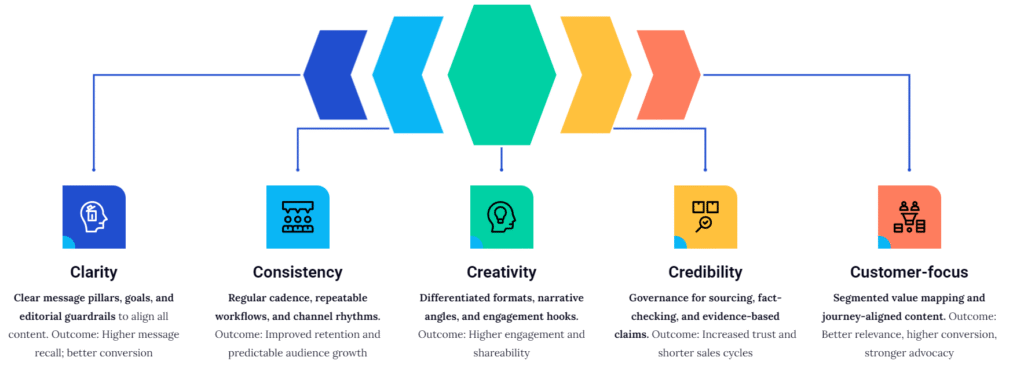
One common version of the 5 C’s is clarity, consistency, creativity, credibility, and customer focus. Together they mean a clear message, a steady publishing rhythm, original ideas, trustworthy information, and content built around the audience’s needs rather than the brand’s.
What is the 70-20-10 rule in content marketing?
The 70-20-10 rule suggests spending about 70% of your content effort on proven formats and topics, 20% on promising new ideas, and 10% on bold experiments. It keeps results steady while leaving room to find your next winning format.
How long does content marketing take to work?
Most businesses see early traction from content marketing within three to six months, with stronger results after six to twelve months of consistent publishing. Email and social can show results faster, while organic search usually takes longer to build.
How do I adapt my content strategy when the market shifts?
Watch your analytics, customer questions, and industry news closely. When behavior changes, such as a new AI search feature or a shift in buyer concerns, update your key pages first, then adjust topics, formats, or channels in your calendar for the next quarter.
Put Your Strategy Into Action
A content marketing strategy is a long-term commitment, not a one-off campaign. Set clear goals, know your audience, build pillar content and clusters, plan a realistic calendar, promote every piece, and measure what matters.
Start with one pillar topic this month. Need help planning it? Contact the Rankiwis team, or read our guide on how to start digital marketing for the bigger picture.