Marketers, small business owners, entrepreneurs, and SEO experts share the same challenge in 2026. Search evolves fast, ai powered search grows, and user expectations rise. The SEO trends in 2026 for small businesses favors strategic content creation, richer structured data, and sharper focus on user intent. This guide explains key SEO trends, shows how AI generated answers and Google’s AI overview affect visibility, and offers an actionable checklist you can use as a long term growth plan.
Why SEO Matters in 2026 for Small Businesses and Marketers
Marketers want predictable pipelines. Small business owners want steady cash flow. Entrepreneurs want scalable models. SEO experts want durable rankings. Strong SEO ties each of these goals together.
Organic traffic still drives a significant slice of revenue in many markets. High-performing pages rank across thousands of google searches and keep sending buyers month after month. That pattern turns SEO into a core ranking factor for any serious growth strategy.
The future of SEO in 2026 for small businesses links search with Social media, email, and paid campaigns. People see a post, search your brand, land on your site, and judge the user experience in seconds. Clear structure, fast pages, and credible signals decide whether they stay or leave.
SEO becomes a long term engine here. You create content once, refine it, and let it support every other channel. Paid ads give quick spikes; strong SEO builds sustainable visibility.
How Search Behavior Changes in 2026
Users now phrase queries like conversations. Many speak to phones and smart speakers. Long, specific queries outnumber short, vague ones.
Examples show the shift:
- “Best SEO trends for a local business in 2026”
- “Future of SEO in 2026 for small businesses with limited budget”
- “Which ranking factor matters most for service brands this year”
Search engines try to decode user intent from these phrases. They look at dwell time, scroll depth, and paths across the site. Strong user experience signals tell the algorithm that your answer satisfies the search.
Teams that run search experiments gain an edge. They test titles, layouts, and angles. They monitor which guides capture featured snippets and which pages slip. Those insights shape the future of SEO in 2026 for small businesses more than any single magic keyword.
AI Assistants and the SEO trends in 2026 for Small Businesses
What AI search means for small business sites
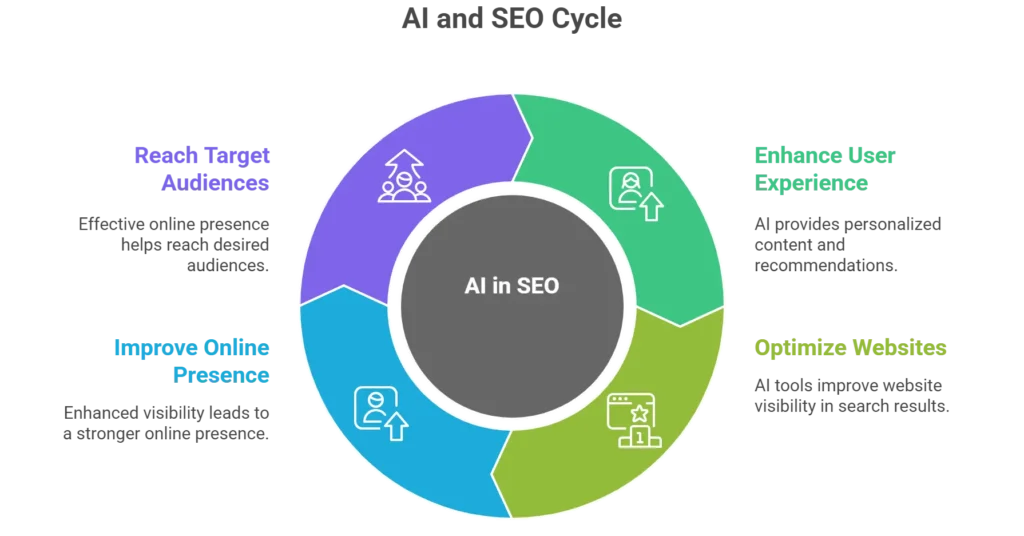
Ai powered search now sits in the center of many journeys. People ask a chatbot for advice, scan ai generated answers, then choose one or two links. Google’s AI overview panels also appear above classic results and reshape attention on the page.
These panels often combine ai generated content with extracts from trusted sources. Strong sites gain brand exposure inside those blocks, even before the click. Weak sites disappear from the conversation.
Generative ai systems need accurate, well-organized documents. Pages that read clearly and show depth become reliable sources for both search engines and chat models.
How to shape content for AI answers
Smart structure helps humans and machines. Ai generated answers frequently pull short segments from guides that follow a clean layout.
Use this powerful pattern:
- Place a direct summary near the top of each pillar page
- Convert real questions into H2 and H3 headings
- Use bullet points and numbered lists for steps and comparisons
- Add compact Q&A blocks that look ready for featured snippets
- Implement schema markups and structured data for FAQ, Article, Product, Service, and LocalBusiness where relevant
Structured data tells search systems exactly what each section represents. Ai powered search engines read this as a map. They can form ai generated answers more confidently and cite your brand as a trusted source.
Topical Authority, EEAT and Local Trust
Search engines judge more than keywords. They evaluate Experience, Expertise, Authoritativeness, and Trust (EEAT). Users do the same.
Small business sites often list services in a thin, generic way. That approach fails to show authority.
Follow a strategic cluster model:
- Choose a few central themes that match lucrative services
- Build one long-form pillar guide for each theme
- Publish support articles around that guide that answer detailed sub-questions
- Interlink the entire cluster to guide both crawlers and readers
Local business trust also plays a major role. Owners can:
- Display real photos of the team, workplace, and results
- Add concise bios that highlight skills and experience
- Present case studies with timelines, metrics, and lessons learned
- Encourage reviews and feature them on key pages
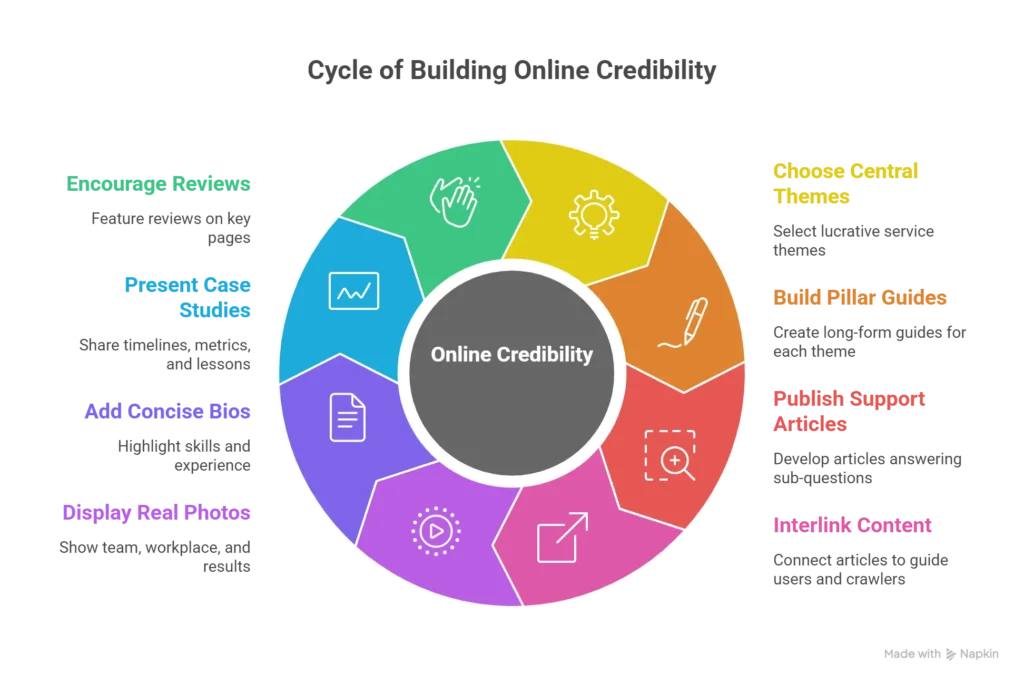
This mix of real-world proof and rich content signals credibility. Search systems see your site as one of the most trusted sources in that niche.
Beyond Google: Voice, Visual, and Social Search
Prospects rarely follow a straight line. A person might discover you through Social media, validate you via google searches, explore ai generated answers, then open Maps to check reviews.
Voice search
Voice queries continue to climb, especially for local business requests. People speak in complete sentences, often with “near me” intent and clear user intent behind each phrase.
Examples:
- “Best family dentist near me open on Saturday”
- “SEO expert near me who works with small business websites”
Local pages that reference city names, suburbs, and landmarks match these patterns. Clear directions and contact details further enhance user experience on voice-driven devices.
Visual search
Visual search plays a crucial role in decor, fashion, food, and home services. Rich images with descriptive filenames and alt text help search engines understand your assets. Structured data amplifies this by labeling products, prices, and availability.
Social search
Users increasingly treat Social media platforms as discovery engines. They search inside TikTok, YouTube, and Instagram, then dig deeper through web content.
Marketers can align SEO trends with Social media output:
- Craft hooks that mirror high-intent queries
- Direct viewers from short clips to long-form guides
- Repurpose top-performing posts into full articles that create content depth
This integrated flow pushes signals into both ai powered search and standard results, improving perceived relevance across the board.

Content Types That Work in 2026 for Small Business SEO
Content creation in 2026 goes beyond simple blog posts. The best assets now act as comprehensive answers and practical tools.
High-performing formats include:
- Step-by-step roadmaps that walk a reader from problem to solution
- Checklists for audits, launches, and quarterly reviews
- Comparison pages that weigh platforms, packages, or methods
- Case studies that track real outcomes and highlight decisions
- Short explainer videos embedded within pillar guides
Generative ai tools help teams create content outlines and expand ideas. They support ideation and structure, yet they still need expert editing. SEO experts refine each piece to align with user intent, brand voice, and factual accuracy.
The 2026 SEO tactics favors this blend of advanced tooling and human insight. Ai generated content becomes a draft. Human editors turn it into a persuasive asset designed for real readers.
Technical SEO Foundations for the Future of SEO
Every powerful content strategy rests on solid technical ground. Search engines care about crawlability, speed, and stability. Users care about ease and comfort.
Key areas for technical strength:
- Page speed on mobile and desktop
- Clear navigation with intuitive labels
- Logical internal linking across each topic cluster
- Full HTTPS security
- Clean index status with minimal errors
Structured data acts as a precision layer on top. Schema markups provide explicit context for content types. You signal products, services, FAQs, reviews, and local business details. Search engines then produce richer results, such as featured snippets and knowledge panels.
Those enhancements increase click-through rates and strengthen the future of SEO for small businesses. A visitor who sees a well-structured result with ratings, price, and quick answers feels more confident before they even land on your page.

Actionable SEO Checklist for Small Businesses in 2026
Teams often feel overwhelmed by SEO trends. A concise, actionable checklist reduces that friction.
Strategy and research
- Isolate one to three high-value themes for the business
- Map core terms, long-tail questions, and intent for each theme
- Assign one pillar page plus several support articles per theme
- Design search experiments to test titles, intros, and layouts
On-page SEO
- Place the primary keyword in the title, H1, opening paragraph, and at least one subheading
- Weave related phrases such as “local business,” “SEO trends,” and “ranking factor” through the text
- Maintain short, focused paragraphs with clear topic sentences
- Incorporate at least one checklist, table, or step list in each core piece
- Include real examples, numbers, or timelines from client work
AI and answer-focused layout
- Turn sales and support questions into H2 or H3 headings
- Build FAQ blocks that align with common google searches
Format steps and comparisons in bullet lists designed for featured snippets - Add structured data for FAQ and other rich result types
Technical health
- Run speed checks and compress oversized images or scripts
- Review layouts on various phones and browsers
- Repair broken links and incorrect redirects
Validate schema markups and structured data with testing tools
EEAT and local proof
- Add author names, photos, and concise bios to important guides
- Display address, phone, service radius, and contact paths clearly
- Gather and highlight reviews from real clients
- Align messaging across site, Social media, and business listings
This framework turns SEO from an abstract concept into a disciplined weekly routine.
9. Beginner SEO Mistakes Small Businesses Still Make
Many brands repeat the same errors year after year. These missteps block the full impact of their efforts.
Common issues include:
- Obsession with broad terms while ignoring high-intent, niche phrases
- Treating content creation as a one-time campaign instead of an ongoing system
- Publishing ai generated content without expert review
- Neglect of mobile performance and overall user experience
- Failure to update key pages as offers, tools, and SEO trends shift
- Lack of structured data and schema markups on high-value URLs
These mistakes distort how search engines read user intent and reliability. Teams that refine one area each month move past competitors who stand still.
10. FAQ
Does AI search remove the need for SEO?
Ai powered search reshapes the path users follow. It does not eliminate SEO. Generative ai systems need structured data, comprehensive guides, and trusted sources to construct ai generated answers. SEO provides those assets.
How can a small business compete with limited budget?
Teams that prioritize focus win. One strong pillar around a crucial theme often beats ten shallow posts. Smart internal links, refined technical health, and thoughtful Social media promotion amplify that single piece. This style of work builds long term strength.
Which metrics matter most in 2026?
Organisations should track organic traffic to strategic pages, conversions from that traffic, and rankings for specific long-tail phrases. Behavior metrics such as scroll depth and repeat visits reveal how well content matches user intent.
Does link building still matter?
Quality links remain a powerful ranking factor. Partnerships, local press, and niche communities send signals that algorithms treat as votes of confidence. Content that offers clear value makes these links easier to earn.
How does ai generated content change daily work?
Teams use generative ai tools for outlines, drafts, and brainstorming. Experts then revise, enrich, and check each piece. This combination speeds up production while preserving depth and accuracy.
How do featured snippets and Google’s AI overview affect traffic?
Featured snippets often deliver strong click-through rates for high-intent queries. Google’s AI overview may keep some users on the result page, yet sites with deeper context, tools, or local proof still attract visits. The goal becomes earning the snippet and offering more value onsite than a small extract can show.
Conclusion
Search now blends classic algorithms, ai powered search layers, and user signals across multiple devices. Marketers, small business owners, entrepreneurs, and SEO experts must adapt without losing focus.
The next year’s SEO centers on clarity, authority, and consistency. Teams that create content aligned with user intent, enhance user experience, and support it with structured data outperform those that chase shallow tricks. SEO then shifts from a side project into a strategic asset. Each guide, each schema markup, each case study adds one more proof point. Over time, search engines and people both start to treat your brand as a trusted source in its field.