
Digital marketing is the lifeline of businesses today. But figuring out where to start or what approach works best can be overwhelming. That’s why having a clear digital marketing roadmap is so important. Think of it as your personalized guide to getting more visibility, connecting with your audience, and achieving real results online.
This guide is designed for you. We’ll break down actionable steps, add real-world examples, and simplify everything so it’s easy to apply to your business. Whether your marketing teams are just starting out or looking to level up, there’s something for everyone here.
Let’s tackle your marketing goals together and unlock success in 2026.
What Is a Digital Marketing Roadmap?
A digital marketing roadmap is a step-by-step plan. It covers every digital channel and task. The roadmap breaks down what to do, when to do it, and who is responsible. It keeps teams focused and actions aligned with business goals. Each step builds on the last, creating a path to growth.
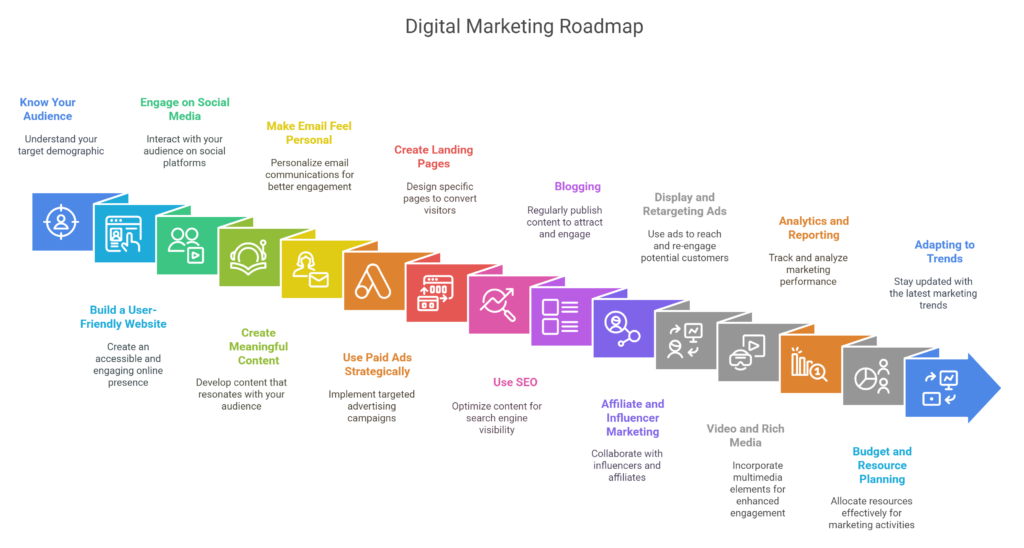
Why Every Business Needs a Roadmap
A roadmap brings order to chaos. Teams know what to do next. Everyone works toward shared goals. The roadmap helps track progress. It makes it easier to spot what works and what needs to change. With a roadmap, you avoid wasted effort and missed chances.
Know Your Audience
If you don’t know who your audience is, your marketing efforts won’t hit the mark. The better you understand them, the easier it becomes to craft messages that resonate.
What You Can Do
- Create a customer profile: Who are your ideal customers? What do they care about? Are they young professionals? New parents? Business owners? Write down details about their age, habits, pain points, and needs.
- Talk to your audience directly: Use surveys, interviews, or simply ask open-ended questions on social media to gather insights.
- Track their behavior: Look at your website data. Which product pages get the most clicks? What headlines spark engagement? Tools like Google Analytics can give you a breakdown.
Real-Life Example
Imagine you run a skincare brand. If your audience skews toward eco-conscious millennials, focus your messaging on sustainability and ingredients. A helpful blog post like “6 Easy Ways to Build a Sustainable Skincare Routine” would speak directly to their interests.
Build a User-Friendly Website
Your website is your digital storefront. If it’s slow, hard to use, or unappealing, visitors won’t stick around. You need a clean, fast, and mobile-optimized site to win their trust and make a good impression.
What You Can Do
- Focus on speed: A slow-loading page can cost you visitors. Use tools like GTmetrix or Google PageSpeed Insights to test your load time and make improvements.
- Design for phones first: With most people browsing on their phones, a mobile-friendly website is non-negotiable.
- Add value: Include clear CTAs, FAQs, and resources that help visitors find what they need quickly.
Real-Life Example
A local bakery could showcase an easy-to-view menu, online ordering, and directions to the store. Including keywords like “best fresh bread near me” can also improve your site’s visibility for local searches.
Engage on Social Media
It’s not enough to post once in a while and hope for the best. Social media is where people connect with brands, so consistency and authenticity matter.
What You Can Do
- Choose the right platform: Find out where your audience hangs out. If your customers are professionals, focus on LinkedIn. If they’re younger, TikTok or Instagram might be the way to go.
- Post engaging content: Share tips, behind-the-scenes moments, or even quick polls to keep your audience interested.
- Respond to comments: Don’t ignore people when they engage with you. Answer questions, thank them for feedback, or join fun conversations.
Real-Life Example
Imagine you’re a fitness coach. Use Instagram to share daily workout reels, post client success stories, and even ask your followers what their biggest fitness challenges are. Make it interactive and fun.
Create Meaningful Content
Content marketing is powerful because it lets you teach, inspire, and connect with your audience. And yes, it’s great for SEO too!
What You Can Do
- Answer common questions: Write blogs, make YouTube videos, or create checklists based on what your customers search for.
- Repurpose content: Turn that blog into a podcast, turn the podcast into a tweet thread, and turn the tweets into a LinkedIn post. One piece of content can stretch far.
- Use visuals: Add helpful infographics or quick ‘how-to’ videos. People love visuals because they’re easy to digest.
Real-Life Example
If you’re a travel agency, create a blog titled “Affordable Destinations for Families in 2026” and share it across platforms. Sprinkle in some beautiful destination photos to catch their attention.
Make Email Feel Personal
Email might not be as trendy as social platforms, but it’s still one of the most effective ways to connect—even better if you personalize it.
What You Can Do
- Write emails like you’re talking to a friend: Use friendly, conversational language. Add their first name or suggest something specific based on their preferences.
- Segment your audience: Break your subscriber list into categories like past buyers, new subscribers, or VIP customers, and tailor your emails accordingly.
- Focus on value: Don’t just send sales pitches. Mix it up with how-tos, special deals, or exclusive access to resources.
Real-Life Example
A clothing retailer could send an email campaign reminding customers of seasonal deals. Personalize it with phrases like, “Hi [Name], we’ve picked out cozy styles just for you this winter!”
Use Paid Ads Strategically
Paid ads can give your visibility a quick boost, but they need proper planning. Aim to target the right audience and craft clear, compelling messages.
What You Can Do
- Set a goal first: Are you trying to build awareness? Drive traffic to your site? Generate sales?
- Pick the right ad format: Test forms of ads like Google search ads, Instagram Story ads, or carousel ads that showcase multiple products. Learn more about How to use Facebook Ads Library
- Retarget interested customers: Show ads to people who visited your site but didn’t buy anything.
Real-Life Example
A home cleaning service could run Google Ads targeting searches like “affordable cleaning services near me” and add a special promotion to entice new customers.
Create Landing Pages
Landing pages have a single purpose—to convert visitors into leads or customers. Every page should serve one goal and guide users to take action.
What You Can Do:
- Focus on one offer at a time: Whether it’s signing up for a newsletter or downloading a free resource, make sure your page has one clear focus.
- Use strong, engaging headlines: The headline is the first thing people see, so make it count.
- Simplify forms: Ask for only the most essential information to keep users from bouncing.
- Build trust: Add testimonials, certifications, or any proof that your brand delivers value.
- Keep it clean: A clutter-free design ensures visitors can quickly understand what you’re offering.
Example:
An online learning platform could create a landing page offering access to a free course trial with a bold headline like, “Master New Skills Now—for Free!”
Use SEO
Search Engine Optimization (SEO) is one of the most effective ways to bring free traffic to your website. It increases your visibility and helps you attract the right audience.
What You Can Do:
- Start with keyword research: Identify your main keyword along with related LSI (Latent Semantic Indexing) keywords to expand your reach.
- Optimize your content: Naturally include these keywords in headings, meta descriptions, and throughout your articles or pages.
- Focus on user experience: A fast, mobile-friendly website is as important as great content.
- Build backlinks: Establish credibility by getting links from reputable sites.
- Stay consistent: SEO isn’t a once-and-done task. Update your strategy regularly to keep up with Google’s algorithm changes.
Example:
A pet supplies store might target keywords like “eco-friendly pet products” and write blogs about sustainable pet care to improve organic traffic.
Blogging
Blogging is an excellent way to drive traffic, improve SEO, and share valuable insights with your audience.
What You Can Do:
- Write for your audience: Answer their questions, solve their problems, and create helpful or entertaining content they’ll love.
- Keep it scannable: Write short paragraphs, use plenty of headings, and break up text with bullet points.
- Add visuals: Support your posts with images, infographics, or videos to hold readers’ attention.
- Internal linking: Link to other relevant posts or pages on your site to keep readers engaged and improve your site structure.
Example:
A personal finance blog could feature articles like “10 Simple Budgeting Tips Everyone Should Know” that are both practical and easy to share on social media.
Affiliate and Influencer Marketing
Partnering with affiliates and influencers can unlock access to new audiences and boost your credibility.
What You Can Do:
- Choose the right partners: Work with affiliates or influencers who align with your brand values and appeal to your target audience.
- Track performance: Monitor affiliate results and pay for actions like sales or sign-ups.
- Collaborate authentically: When partnering with influencers, ensure they give genuine, transparent testimonials to maintain trust.
Example:
A meal kit delivery service could work with food bloggers or chefs who create sponsored content showcasing recipe options and the kits’ convenience.
Display and Retargeting Ads
Display ads help build awareness, while retargeting ads encourage lost visitors to come back and convert.
What You Can Do:
- Create clean, eye-catching banners: Use simple visuals and messages that are easy to understand at a glance.
- Test your ads: Try multiple designs and headlines to see what resonates most with your audience.
- Set up retargeting campaigns: Show ads to people who visited your site but didn’t take action, like abandoned cart reminders.
Example:
An online fashion brand could retarget shoppers by showing them the products they viewed or adding messaging like, “Hurry! Only a few left in stock.”
Video and Rich Media
Dynamic content like videos and infographics captures attention better than plain text. It’s memorable and engaging, making it an essential part of modern marketing.
What You Can Do:
- Tell your brand’s story: Use video to showcase how your product solves pain points or improves lives.
- Add customer testimonials: Videos of happy clients speaking honestly about your services can build trust.
- Use infographics: Simplify complex data or processes with visually impactful content.
Example:
A tech company could create an explainer video showing how their software simplifies project management, reaching a broader audience on platforms like YouTube.
Analytics and Reporting
You can’t improve what you don’t measure. Analytics shows you which strategies are working and where adjustments are needed.
What You Can Do:
- Track website metrics: Use tools like Google Analytics to compare traffic, clicks, and conversions.
- Focus on actionable insights: Identify where potential leads drop off or which campaigns drive the most engagement.
- Stay agile: Use what you learn to shape future efforts and continue optimizing.
Example:
An e-commerce store could discover through analytics that email campaigns outperform ads for sign-ups and shift resources accordingly.
Budget and Resource Planning
A clear budget keeps your finances in check and ensures every dollar is spent wisely.
What You Can Do:
- Allocate funds to your strongest channels: Focus on the platforms and campaigns that work well for you.
- Use tools wisely: Invest in practical tools for email marketing, design, or automation that save you time and effort.
- Track ROI: Monitor the cost-effectiveness of your investments and refine your budget over time.
Example:
A startup could allocate 50% of its marketing budget to paid search ads and 30% to content production based on past performance metrics.
Adapting to Trends
The world of digital marketing is always evolving. From AI tools to voice search, adapting to new technologies can give you an edge.
What You Can Do:
- Stay informed: Follow industry blogs, attend webinars, and experiment with emerging tools.
- Test automation tools: Use AI to schedule posts, analyze customer behavior, or craft personalized recommendations.
- Optimize for voice: Add conversational phrases to your content for voice search optimization.
Example:
An online marketplace could use AI chatbots to offer faster customer service, meeting modern shoppers’ expectations.
Frequently Asked Questions
Why do I even need a digital marketing roadmap?
Think of it like this: without a roadmap, it’s like trying to drive to a new place with no GPS. A roadmap keeps you organized and helps you focus on the things that really matter, like getting to know your customers or tweaking your website. Without it, you might end up wasting time (and money) spinning your wheels on stuff that doesn’t actually make a difference.
How do I make a digital marketing roadmap without getting overwhelmed?
Take a deep breath and start small. First, figure out who you’re talking to (your audience) and what you want to achieve. Then, break it into bite-sized steps. Maybe build a nice website, learn a little SEO, start blogging, or send out emails. Each task should have a goal, like growing followers, boosting website traffic, or collecting leads. Choose the right platform for each task, and you’ll have a solid plan before you know it!
What’s the very first thing I should do when creating a roadmap?
The first step is getting to know your audience. Who are they? What do they love (or hate)? What problems can you help them solve? It’s like being at a party and knowing exactly how to start the conversation. When you understand your audience, you can connect with them in a way that feels real and meaningful.
How often should I take a look at my digital marketing roadmap?
Think of it like checking a map on a road trip. You don’t need to stare at it constantly, but every few months, take some time to see if you’re still on track. What’s working? What’s not? Maybe some things need a little tweak to get better results. Regular check-ins keep you moving in the right direction without wasting time stuck on dead ends.
Crafting a roadmap doesn’t have to feel overwhelming. It’s your guide to staying focused, making smart moves, and achieving your goals step by step. You’ve got this!
Final Thoughts
A digital marketing roadmap keeps your efforts focused. It helps you grow your brand online. Follow each step. Track your progress. Adjust as needed. Success comes from planning and action.
Ready to start? Build your roadmap today. Grow your business tomorrow.

